SHOW NOW

SHOP NOW
SHOP NOW
SHOP NOW
SHOP NOW
SHOP NOW
SHOP NOW
SHOP NOW
SHOP NOW
SHOP NOW
SHOP NOW


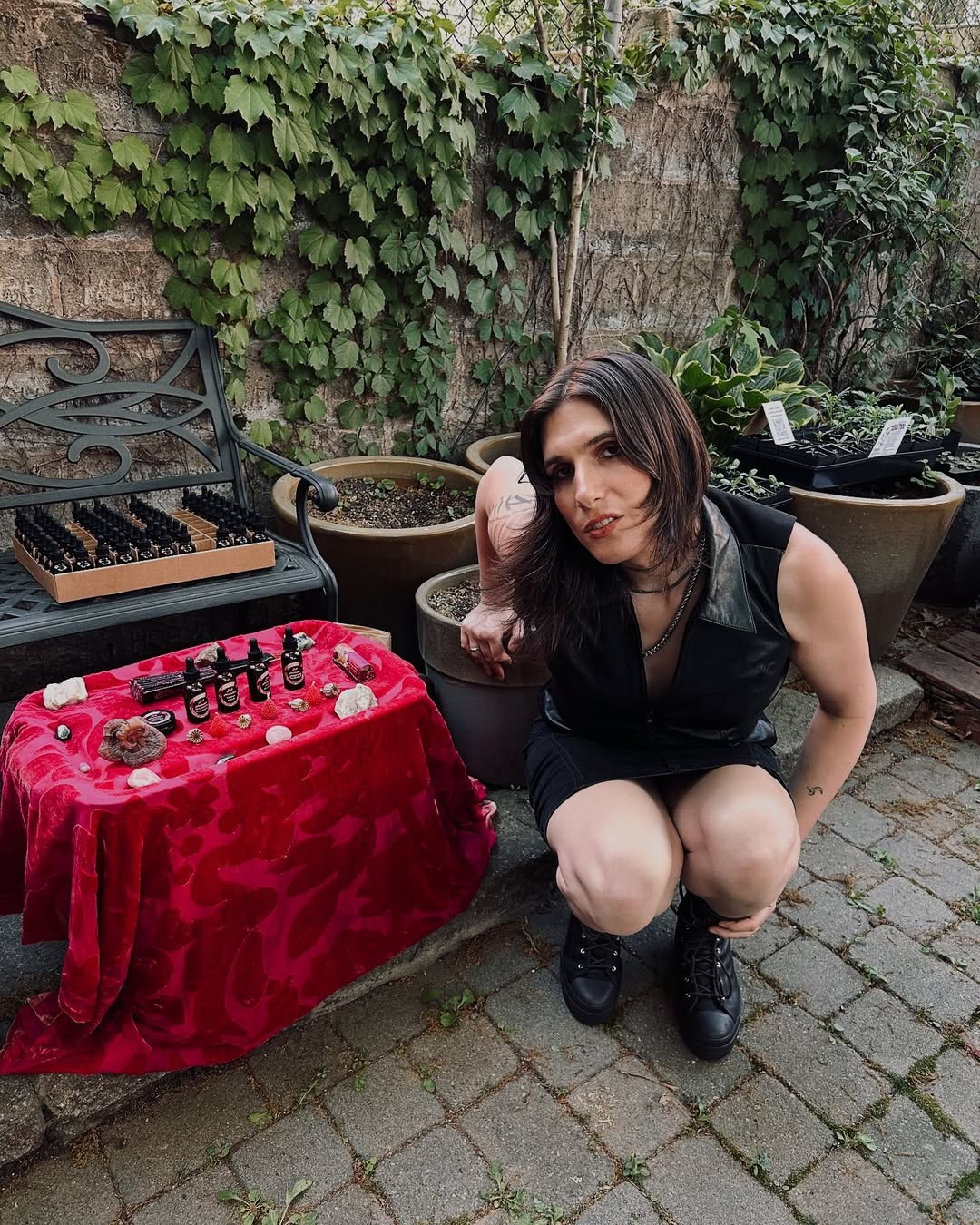
PLANT MEDICINE FOR THE REST OF US
Ayelet dreams of transsexuals thriving & schemes about ways that biomedicine, holistic medicine, and plant magic can work in synergy towards that end.
She is a clinical herbalist and community educator specializing in trans-femme health, hormones, surgery support, concussions, & emotional well-being for the freaks, rabble rousers, and those who love us.
Ayelet has studied at multiple herbalism schools since 2012, and has been offering workshops and herbal consults since 2022. She is drawn to the transformative potentials of science and ritual, all in service of resisting empire, living fully, freaky, and fabulously. All the while restoring and remediating the earth.
Ayelet invites us to open up to the interconnectedness of ourselves and all plant medicines. She leans on cannabis when it’s the appropriate medicine (namely minor cannabinoids, like CBD!), as she does all the other herbs in the apothecary. She grounds us in the dynamics of proper time, place, and matching-making between person and plant to achieve our ideal physical, mental, emotional, and spiritual states.
Ayelet works with an approach that combines western herbalism, Traditional Chinese Medicine, scientific studies, and spiritual/magical practices. She is of a Jewish Ashkenazi lineage and is a staunch anti-zionist. From the river to the sea.
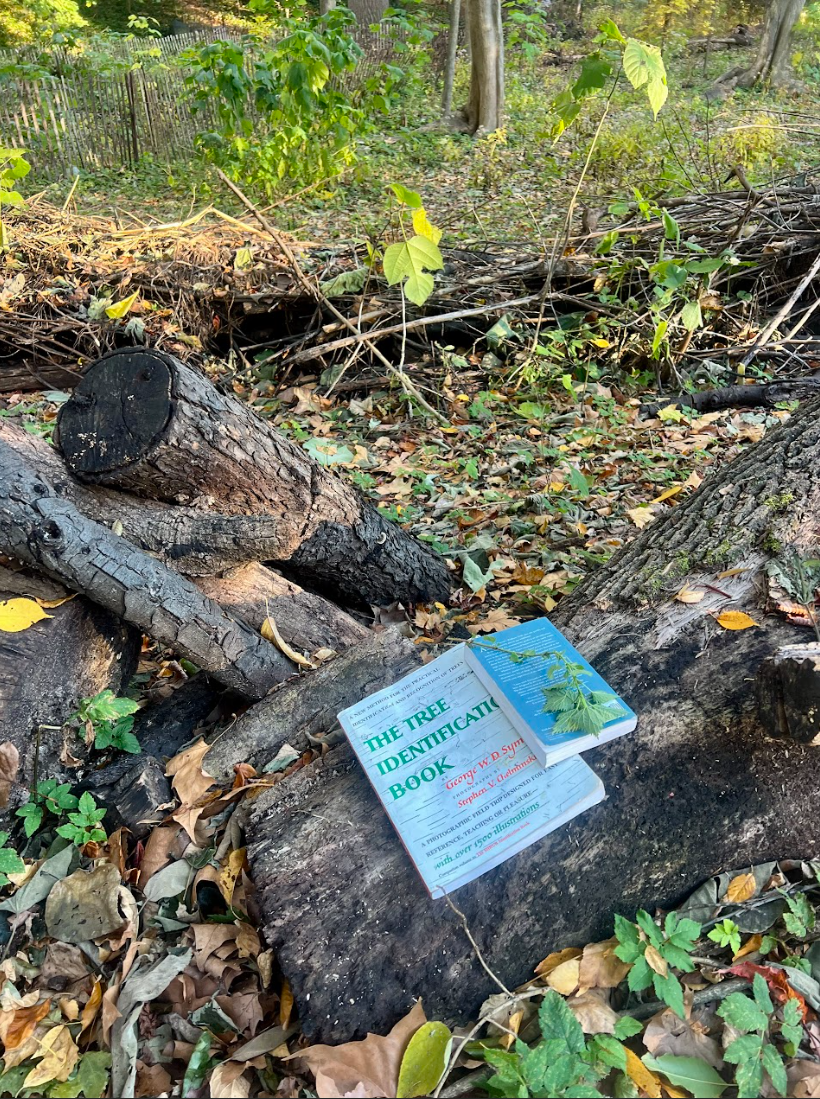
Doll Herbalism is committed to the land back struggle of the indigenous stewards of turtle island and beyond. While working towards that, she believes we all have a responsibility to be stewards of the lands we live on, including city dwellers. She believes that herbalism can be a gateway towards earth and ecosystem connection and reciprocity, and that queer and Trans people have a special role in this.
Taste her delectable remedies at DollHerbalism.com + follow @Doll.Herbalism to catch her next workshop or pop-up!
This is a full transcript from a live interview for The Sweet Spot. It has been edited and condensed for clarity by interviewer + community healer, HIERO. Watch a part of our interview.
H = HIERO
DH = Doll Herbalism
H: Tell us your name, preferred pronouns, and what your calling is.
DH: Wow, hi ... My name's Ayelet. My practice is called Doll Herbalism and my pronouns are she/her. I am an herbalist—sometimes I call myself a clinical herbalist, sometimes a community herbalist, sometimes both!
I really try my best to have my herbal medicine practice be revelevant for marginalized people and, to the best of my abilities, get herbs to those with more marginalized experiences, coming to them in unexpected places.
H: What were your family’s views on plant medicine? Did your mom give you elderberry syrup in lieu of cough medicine or was it more rigid?
DH: It was pretty rigid. It wasn’t anti-plant medicine, but my mom is a family doctor, so everything was very medicalized. And so, every kind of issue would be solved with some pharmaceutical medication, something in pill-form. All of that was done with love and also a lot of anxiety around health. Part of my journey around herbs and plant medicine came from being on so many pharmaceuticals and saying to myself “I think there’s another way.”
It’s important for me to say I’m not anti-pharmaceutical—I rely on many of them to exist in the world! But, I am very interested and intrigued by this place of synergy between bio-medicine and earth-based-medicine.


H: Let’s ground ourselves in the current moment; It’s Trans Awareness Month. What do you wish healers and dealers were more aware of in working with Trans clients?
DH: I have two almost polar opposite things that I think, but there is synergy between perceived opposites.
On the one hand is that Trans people are people—we’re not just thinking about hormones and surgery all the time. In fact, one of the most powerful ways that herbs have supported me in my transition was emotionally and spiritually in ways that had nothing to do with surgery or hormones. Plants were there for me as guides, support systems, and a way to navigate the intense emotional tumult that comes with gender transition. I would say this for any big life transition. That’s one of the most powerful ways that I think plants can be beneficial for people is in the emotional and spiritual world. So yes, I want people to remember that we are whole complete beings and not just our Transness; we want lung and cardiovascular support, too! Trans healthcare is healthcare. There’s no separating that.
On the flip side of things, this is a moment where being Trans is kind of scary—weaponization of fear and uncertainty around Trans people, especially Trans women and Black Trans women and Trans women of color. I think both having this awareness of what are the particular challenges that the Trans community is facing on a societal level at this point is really important, and also remembering that we’re just people like everybody else.
H: I think the point that Trans healthcare is healthcare is very important. We see now in addition to conservative legislation attacking Trans rights, they are now coming for CIS bodied women with “male-levels of testosterone”. It’s a reminder on intersectionality, and how all of our fights are the same fight. Even if it’s not directly in your community, they’re coming for you next. Even CIS-people need access to gender-affirming care and vice versa. It becomes a question of public health and social goods.
DH: I feel this deeply. Anytime we structure society or our systems in a way that ensures any person can be whole, whether that’s in regards to gender or not, that’s beneficial to everybody. Trans healthcare ensures that everybody has access to the specificities of care that they need. Yes, it’s the question of who are they going to come for next, but also it benefits everybody when people are feeling good.
How do we exit this scarcity model which says, “Well, if that person is getting what they want, that means I'm not getting what I want.” When one person is thriving, that is a net good for everybody and ensures that we can have access to our own thriving as well.
H: Although oftentimes, the best medicines are bitter, you speak a lot about finding sensuality in healing. What connections do you find between plant medicines like cannabis and our relationship to pleasure and deliciousness?
DH: It’s a little tricky because we as a society are very attuned to the immediate gratification of pleasure. I think sometimes we are a little fixated on pleasure in the moment rather than “Wow, if I take this bitter tasting medicine, this might be beneficial for me over time. Somewhere, at some point, there needs to be a cultural shift around what pleasure is. How can we think about pleasure from a zoomed out place?
All of that said, we live in New York City and there's a million different stimuli. I’ve found that people’s responses to my medicine when it tastes good, I can see their body chemistry change in the moment. I think that the flavor is this indicator of just how plants can change body chemistry or emotional states of being right now in the moment. Flavor is not only a gateway to that realization or awareness, I also am just pro-pleasure in and of itself!
Yes, I want to think about what pleasure looks like in longevity: sustainable pleasure. Because a lot of what we need in order for liberation and justice to happen is not going to be pleasure in the moment—building stuff, tearing stuff down, being in the streets, and being in the struggle—it’s not going to be immediately pleasurable. So I want us to learn to be receptive to moments of the mundane or even moments of strife to be prepared for what goodness would look like in the long term. But herbs are treats, it’s truly a gift to be on the same timeline as plants, so I treat my remedies as treats. That approach has really helped people be able to access the medicine more, when it is pleasurable for them.
Pleasure is a good thing after all!
H: What is your relationship with cannabis? Has it evolved?
DH: My relationship with cannabis is a little bit all over the place! I’ve had a lot of experiences of not knowing how to interact with cannabis; taking a lot of it and arriving at mental and emotional states that were not good for me. In the past seven to ten years, I’ve found my way with her a little more. Accessing remedies that were higher in CBD content were extremely beneficial when I was dealing with a lot of anxiety and mental health issues.
So I think I’ve arrived at a place where this isn’t an herb that I lean on all of the time, but I do when the moment calls for it. Myself and the world have a lot more awareness now to navigate cannabis.
H: Does consuming cannabis affect or aid in your medicine-making for yourself or colleagues?
DH: I see cannabis having an incredible effect for people who engage with herbs—as we know, cannabis is an herb and a medicine. I’ve seen and experienced herbalists come up with some powerful remedies both cannabis and non-cannabis-based and use it throughout their process, just like any other herb in the apothecary! The way that I relate to any herb is that no single plant is the end-all-be-all remedy for any person.
I try to matchmake plants, who are whole complete beings with different vibes and energetics, with the right people, who are also whole complete beings with their own vibes and energetics. I treat cannabis similarly.
H: What is your favorite way to consume cannabis?
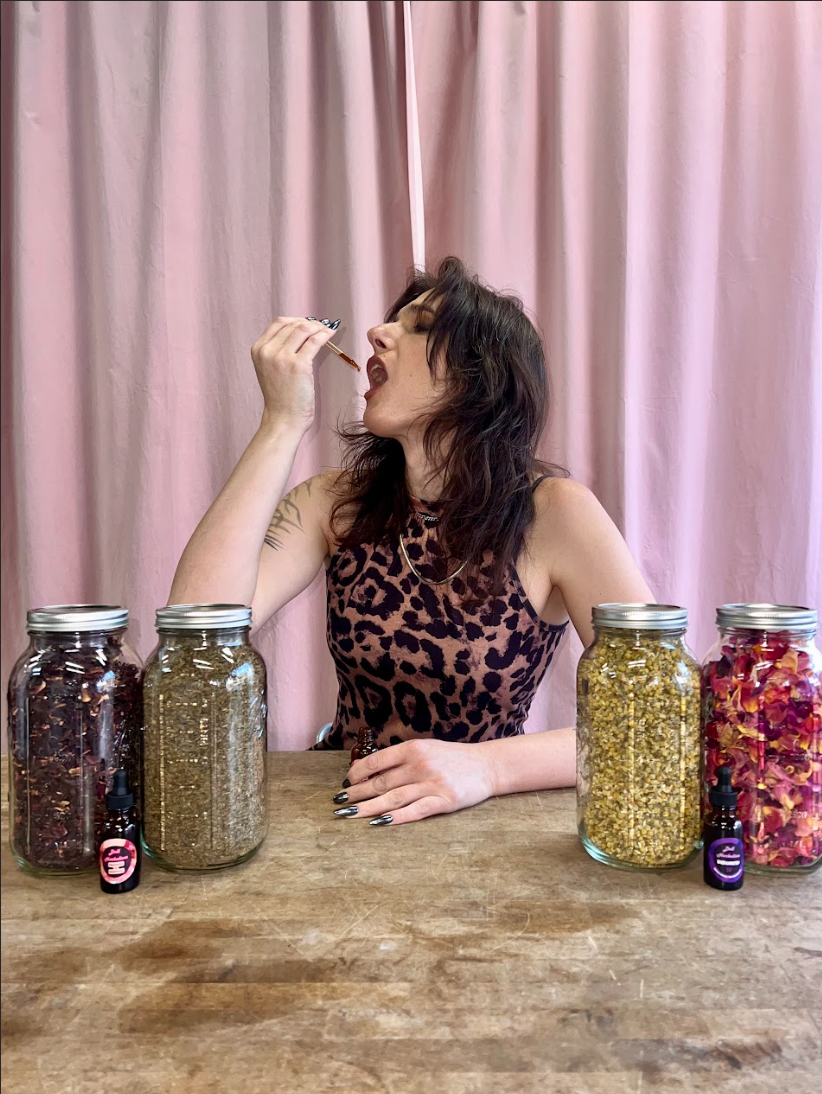
DH: I’ve gotten really used to the tincture model of medicine, so I have really enjoyed accessing a CBD oil in that way. I’m not a very good smoker and roller, but I want to get into herbal smoke blends that include cannabis because I want to get back into smoking. That’s really more aspirational.
H: Who would be in your dream sesh? Dolls, icons, people who are living, deceased, whoever.
DH: This is such a good question, how big can the circle be?
I would really want to smoke a blunt with—she was somebody who was really part of my awareness of transness and carceral reality—CeCe McDonald, she seems so fun! I definitely have smoked with someone who is like a mother figure to me, her name is Renée Imperato. She’s a transwoman about town in her 70s who is a scene unto herself, very active, parties a lot—she would be in my rotation for sure. Ummmm… and you! I’d love to have you in my blunt rotation, HIERO, I’m sure it’ll happen.


H: You emphasize accessibility heavily in how you present your offerings to the people, be it through sliding scale pricing models or Doll-centric spaces, as well as, empowering people to work with the plants directly around them through your Plant Walk series. Given this, what challenges have you found in "bringing the herbs to the people", how have you surmounted these, and where do you still need support?
DH: It’s the challenge of our time—money! If we didn't live under capitalism, colonialism, and white supremacy then we’d just be growing our own herbs and wild-harvesting from the wild forest that so-called-New-York-City once was. I have access to the resources I do, but I still have to pay rent and exist as a human, so I’ve tried to find ways where my labor can be honored and compensated for and still get herbs to the people. In the past, I would do more long form consultations which is the ideal way to talk about health; having spaciousness and building trust. Sadly, people don’t have $200-300 to throw down on a practitioner and people don’t always know what an herbalist has to offer.
So, there’s this double challenge: things cost money and people don't always know that they need this or what it even is. I’ve found that since I’ve started making these smaller tincture bottles—$25, $15 for the dolls—I can give away a lot as gifts. But I try to find ways where people don’t have to spend a lot of money to get access to herbs. It’s brought me to a lot of really cool places. I am a regular vendor at Body Hack, so I get to serve the club girls, also different kink and BDSM fairs and things like that.
I really try to position myself as someone who is getting herbs to people who might not think of them, but really need them.
My classes are sliding scale, I never turn Dolls away! I did this one free class for the Dolls over the summer (I usually get about 10-20 Dolls per class), but for this one, 50 Dolls. I realized that these holistic realms can often be less than relevant to the lived experience of those who don’t have the most normative experience, but access to holistic healthcare and education is actually really important, and if it was free then everyone would access it!
H: Some of the challenges specific to New York City that I’ve heard you discuss is the lack of green spaces or access to them or the personal space for a home apothecary. What are some ways that you've circumvented this to be able to sustainably produce high-quality herbal products here?
DH: What I’ve noticed around my herbalism practice is that there is this fractal wave, clinically speaking in terms of matchmaking plants and people, medicine is much more powerful when people have relationship with the plants. That mirrors the ways my practice has moved through this terrain of New York City is it’s really all about the relationships that I've formed with people and what has come out of that.
As one example of that, we’re here right now in this beautiful community-oriented and politically-aware flower shop called Stems Brooklyn. It’s owned by my neighbor, Suzanna, and I am able to utilize the studio space after hours because of my relationship with Suzanna and because of the ways that Suzanna as a business owner is trying to cultivate relationships very intentionally in her community with whether it’s by supporting local growers or community gardeners, or very generously opening up her space to Doll Herbalism. Through relationships like that my community herbalism practice is finding a space; even in busy, expensive New York City terrain. Even y'alls generosity at SASS, giving me this platform.
I honestly do feel really supported by community. People are constantly reaching out to me to help. I want to shout out Body Hack for how they’ve platformed me with vending and educational opportunities. For those that don’t know, Body Hack is a community-oriented and Trans-run party that happens in Bushwick/Ridgewood. Body Hack, Stems, SASS: I feel like community is really showing up and is really excited about what I’m offering. I think we’re figuring it out.
H: Wow, that's beautiful, and look! The sun comes out as we move on to our last question. What’s next for Doll Herbalism? Is there anything else you would like to emphasize?
DH: One more thing around community support, just shout out to the people that have volunteered—I have an arm injury and herbalism is a lot of manual labor and people have really offered to help me and I have a whole list of helpers now!
What’s next for Doll Herbalism? I’ll be vending at a lot of holiday markets, so you can catch me out and about in the world over the next two months. I have a bunch of online and in-person workshops coming up, the next one is about herbs and hormones in the beginning of December. I vend regularly at Body Hack and do plant walks there. I think the next big thing for me is getting an online shop up and running and getting some tea blends out there.
Eventually, I want to have an apothecary space where I can offer dry herbs and tea blends—that’s the dream and there’s some schemes in the works! I’m just really intrigued by how things are organically finding their niche and their home in their own time.
I feel really believed in and there’s no greater gift than that.
*Editor’s Note: Since the date of this interview the Doll Herbalism online shop has launched! Access it below!*
Stay in touch: Instagram | Shop | Website

.jpg)
Harsh Babe (aka Ariel Friedlander) is the Jewish American Pillow Princess of Brooklyn, New York. As a drag queen, organizer, and arts educator, she combines cultural work and whimsy with Many Hands Workshop, Hot Girls Organize and her political home of Jewish Voices for Peace New York.
A proud divacratic socialist, she helps throw drag show fundraisers to elect socialists into office and mobilize the femmes to fight fascism!
You can find Harsh Babe performing on various all star sapphic stages across Brooklyn, including her very own party Dyke Darty every month at The Rosemont. Upcoming shows:
Follow her on Instagram
This interview has been edited and condensed for clarity by Solonje Burnett, Weed Auntie. Watch the teaser.
WA = Solonje Burnett, Weed Auntie
HB = Harsh Babe
WA: Can you tell us your name, preferred pronouns, and what you do for work/passion?
HB: My name is Ariel, and I use she/her pronouns. I also use she/her pronouns in my other name, which is Harsh Babe. I am a drag queen and artist and organizer and educator. I kind of have a beautiful constellation of different occupations and passion projects that make up what I do on a day-to-day basis.
WA: Yaaas, we love a multi-hyphenate! So can you tell us a little bit about your upbringing? Did your environment help to shape how you show up in the world?
HB: I grew up in Delaware, me and Aubrey Plaza and Joe Biden. I went to an art school and I also grew up with type 1 diabetes. I feel like those two things really informed who I am today.
I was diagnosed with my chronic illness at just two and a half years old and that kind of launched me into this accidental activist role from very young because my mom got really involved with fundraising for juvenile diabetes research. Then when I got access to the internet and discovered Tumblr and the glitter feminist movement.
As I look back on it, I got really passionate about social justice, especially through the lens of my life with chronic illness. That's when I started the first feminist club in Delaware, which came out of my art school. From there, I became very political, but it wasn't until I went to college that I learned the difference between an activist and an organizer. I very much see myself more as an informed, educated, and politically conscious organizer now.

WA: What is your relationship to plant medicines? May it be cannabis, hemp, fungi? How do you use them in your day to day?
HB: That's a great question. So like I said, I grew up with chronic illness, type one diabetes, pretty much my entire life. I went to college at the University of Michigan and in the 2010s, you were actually able to get a medical marijuana card. That became really instrumental to my success in college. I was able to get a medical card my sophomore or junior year and that really helped me be able to unwind or sometimes if I had a bad day of high blood sugars, just to literally like physically feel better at the end of the night. So it not only helped me mentally, but physically. I was so grateful that I was able to have that access in the state of Michigan to these medicines, because if I had gone to another college, I might not have been able to access such help and resources.
Also during the lockdown, during the pandemic in the beginning of 2020, I was part of this mutual aid group because I was very high risk for COVID complications. This mutual aid group that helped me get medical marijuana even during lockdown and that was really beautiful and important to me. I'm really grateful for how I was able to access plant medicine at such a young time in my life.

WA: Thank you so much for sharing that. So I've had the pleasure of working with you at SASS as well as watching you work both in the streets and on stage. The first time was at a Mamdani fundraiser at Xanadu. I was like, okay, girl, go off. I didn't even know that you were a drag queen! How did you get into it as a femme?
HB: I was such a big fan of Drag Race. I got into it through my mom and Project Runway at a very young age and then RuPaul’s Drag Race when I was in college. I remember following this one artist, Femme Fatale, who's an incredible drag queen. I pretty much thought if I wanted to be a drag queen myself, I had to be a burlesque dancer and that women couldn't actually be drag queens. Then I found out that Creme Fatale, my favorite drag queen, was literally a woman, a cis woman. And I was like, oh, I can do it too!
Through a protest that I helped organize with this group called Rad Fun at University of Michigan - It was like radical, anti-capitalist, deviance, something, something fun. We put on this protest through campus around graduation where basically it was like a pride parade, say what you want, let's make a ruckus! I invited a couple of drag queens to join me, including Ariana Grindr who would later become my drag mom. And she cannot stop having kids. I was very close to her and all my other sisters in Michigan. Then when I moved here to New York City, I felt like because of the internet, I already had this huge community of really diverse drag performers from kings to queens of all genders and sexualities.
And I also met my second drag mom, Briar Blush, who is recently on RuPaul's Drag Race, who's non-binary and also has a variety of drag children. And it's so funny because I still even today see this discourse go around about how drag is just cis men and dresses and how that's inherently misogynistic or transphobic. And literally off the top of my head, I can maybe only name like three cis gay men in at least my scene here in Brooklyn who do drag. And for the most part, it's like all women, trans people, non-binary people who I know that do drag.
.png)
WA: I think for me it's just like exactly the stereotype that you mentioned and like the exposure of you're somebody who's like a drag race aficionado or somebody who's deeply embedded in the culture you know but I think for most people in the mainstream they have no idea.
HB: Yeah, no idea. Well ask my two non-binary drag moms what they think about that (laughs).
WA: I gotta look up Ariana Grindr.
HB: She's a fungi queen.
WA: I'm here for it. What sparked the transition from Daya Bee-Dee to the artist now known as Harsh Babe?
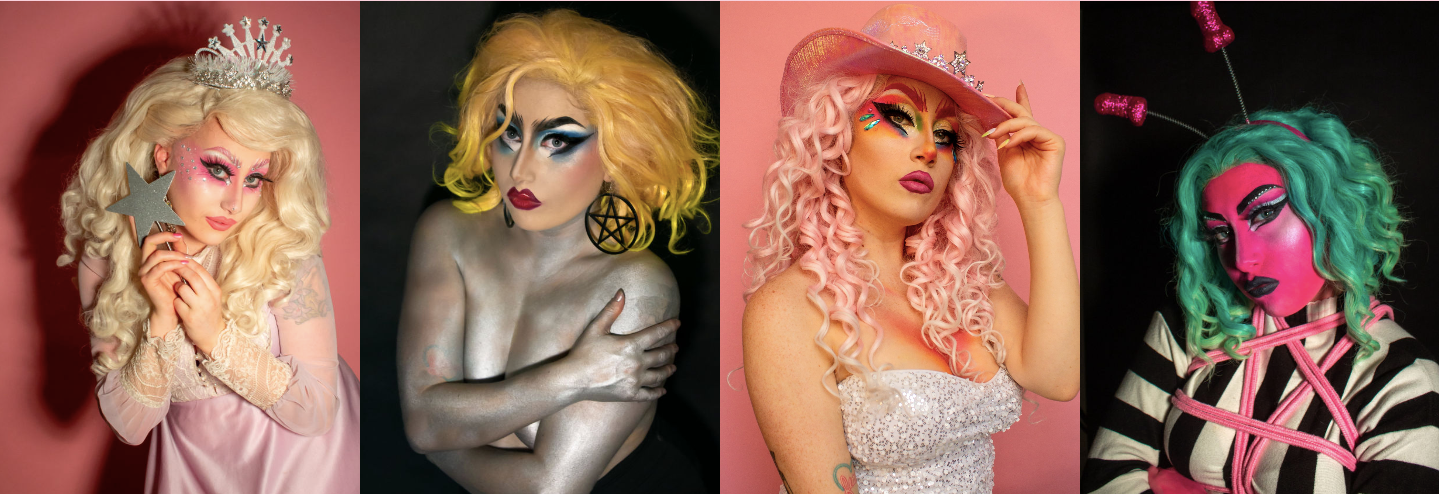
HB: I did start under the name Daya Bee-Dee and like I said growing up with chronic illness was like a huge part of not only just my day-to-day life and still is, but also really formative to my politics and greater understanding of the world. When I first started drag, I definitely had a very identity, social justice kind of approach to my drag. And now I'm kind of more of a show, not tell girl and I realized I didn't want my chronic illness to literally define and name me. And it helped that a drag queen named Daya Betty was on RuPaul's Drag Race to finally be the thing that really made me change it.
I chose Harsh Babe originally, it was just supposed to be like a transitory, like temporary name. Like I said, I went to the University of Michigan and it was at that time that I made that name change later in my college years. My biological mother also went to University of Michigan and she was in a girl group called the Harsh Babes and so i thought it'd be really cute if i took on her name but she told me, “um you're not a harsh babe, harsh babes don't wear that much highlighter. Harsh babes are matte and wear red lipstick. You're too shiny to be a harsh babe.” And she's not even a drag queen, so.

WA: Speaking of your moms, how did Briar Blush become your drag mother here in New York?
HB: When I moved to New York, it was literally in 2020 during lockdown. I grew up only a couple hours away. I was an art school kid. I was very publicly out at a young age. It was never if I moved to New York, it was when. I moved here peak lockdown 2020, and obviously I was in this amazing city, but I was mainly online.
Briar Blush was living in Boston at the time. I had done a summer there. I knew a lot of girls in the scene. We became really, really close via FaceTime. She would come and visit as the world started opening up again. She would take me shopping and give me advice and teach me how to do my hair, how to do my makeup. And she called me a Blush, one of her daughters. And I was like, “I already have a drag mom, Dr. Ariana Grindr,” who then moved to Chicago. I love her but we don't see each other every day like we used to and so Briar said, “I give you more drag advice and help you with your drag more than Dr. Ariana Grindr does.”
I kind of couldn't deny that she was, in fact, my mother, even though she's also technically younger than me. I'm so grateful to be a Blush. It's really – and Harsh Babe Blush sounds good. I think so. And I'm literally wearing, like, four blushes right now, so I think it makes sense.
WA: A little Fuck Mary Kill. MAGA Drag Edition. J.D. Vance, George Santos, Rudy Giuliani.
HB: I'm not sleeping with any of those divas. Girl, hand me the gun.
WA: (Laughing hysterically)
HB: No. You want me to go on record and say what MAGA politician I want to marry and fuck?!
WA: Well, as their drag entity, because they've all...
HB Wait they’ve all done drag?
WA: Yes, they've all done drag!
HB: Okay, well, J.D. Vance was chopped… I honestly am not familiar with Rudy Juliana’s.
WA: Juliana!
HB: Juliana!
WA: I wonder if that was her drag name?
HB: Rudy Tootie Giuliani. So I guess I'd fuck her, just for the experience of getting to know her. And then, you know, George Santos' drag is pretty fierce, so... I guess I'm marrying, if you hold a gun to my head.
WA: You have no choice. You would marry George Santos?
HB: No, not on record. Hahaha! Or off. You're crazy for that.
WA: I know I had to. Hahaha! I had to put a spicy one in there for you girl. Oh my god. But when you look at these Republican politicians that are just stripping rights left and right, and then you dig into their past and see so many of them are literally just obsessed.
HB: Gender is a construct, tear it apart.
Well, I'm sure really the thing is they just, these things get unearthed, and I bet they didn't even remember that they too had expressed different genders and, you know, played with sexuality and femininity before, because it was just like a fun activity to do, it was something natural like in their whatever environment they were in at the time to like throw on a wig and have fun.
And then, you know, when they other all of these LGBTQ people and trans people, they're able to say that's not me. I've never done anything that would ever threaten my alpha masculinity I've constructed for myself. When in reality, we're surrounded by gender everywhere, and it's always been fluid, and it's always been just fun to play with, even for the biggest, bigots of them all.

WA: Not as stressful as MAGA drag. So you're such a community queen and who or what inspired your activism beyond, I know you mentioned your diabetes, but and your direct action community organizing, like what keeps you going and how do you find joy in an increasingly compounded grief state?
HB: Yeah, I think something I've always been a really strong believer in is that you're not going to be able to build a movement and get people to fight for the utopia that you dream of, unless you actually create those moments of queer liberation within the struggle.
So in the work that I do, I'm always trying to center the vision and to actually build the future we want to live in while we're still fighting the fascism, bigotry and hate all over the country. It's a lot of organizing behind the scenes isn't very glamorous. It's a lot of meetings and group chats.
And when we do have our moments of coming together and making a very public statement, I think it's really important that we bring people in with joy and not only trying to just say our values, but to make space for who we want in the fight. And for me, everything I do is for the dykes, the dolls, and the divas. And I am going to show up for my community in any space I am in.
I'm never going to compromise who I am to be in a political space. And I think that can shock a lot of people from the outside because we're shown that we have these ideas that certain communities in the struggle have bigoted ideas or closed-minded or the sense of rigidity, but in reality the socialists, the anti-fascists, the anti-Zionists have a lot of diverse community and are very welcoming because they understand that all of us, including queer people, trans people, women, are in the fight too.
So when I do have the chance to make my own community spaces, you may call it, whether it's like a drag show fundraiser or even a direct action, if I can make it really centered to welcoming those dyke, dolls and divas, I will do it because not only do they deserve rights in the future, but they deserve to be heard now.

WA: Ari for President! So this is a question we ask everyone and I would love to know who would be in your dream SASS sweet sash and they could be icons, drag queens, activists, living or deceased.
HB: Wow. OK! If I were to get my dream sweet spot rotation going, I will say I am a Lady Gaga stan. I'm a little monster and Lady Gaga, despite all of her problems and maybe neoliberalism, is invited to the session.
And I'm also going to bring in my girls, let's say, I'm going to bring Chelsea Manning to the session. I'm gonna bring Chrissy Tripecca, a fabulous lesbian pop star. Oh, my gosh.
And I also want to bring Candy Darling. I would love to witness her fabulousness and party together. Oh, my God.
That's such a good question. Living, deceased. Like, I know I'm missing some icons.
And I'm going to bring Machine Dazzle, who is a fabulous artist. I think I'm really curating a visual experience. I can see it. I want everything from like the cunty suits to like the crazy space rocket glitter glamour outfits. And pink. Lots of pink.
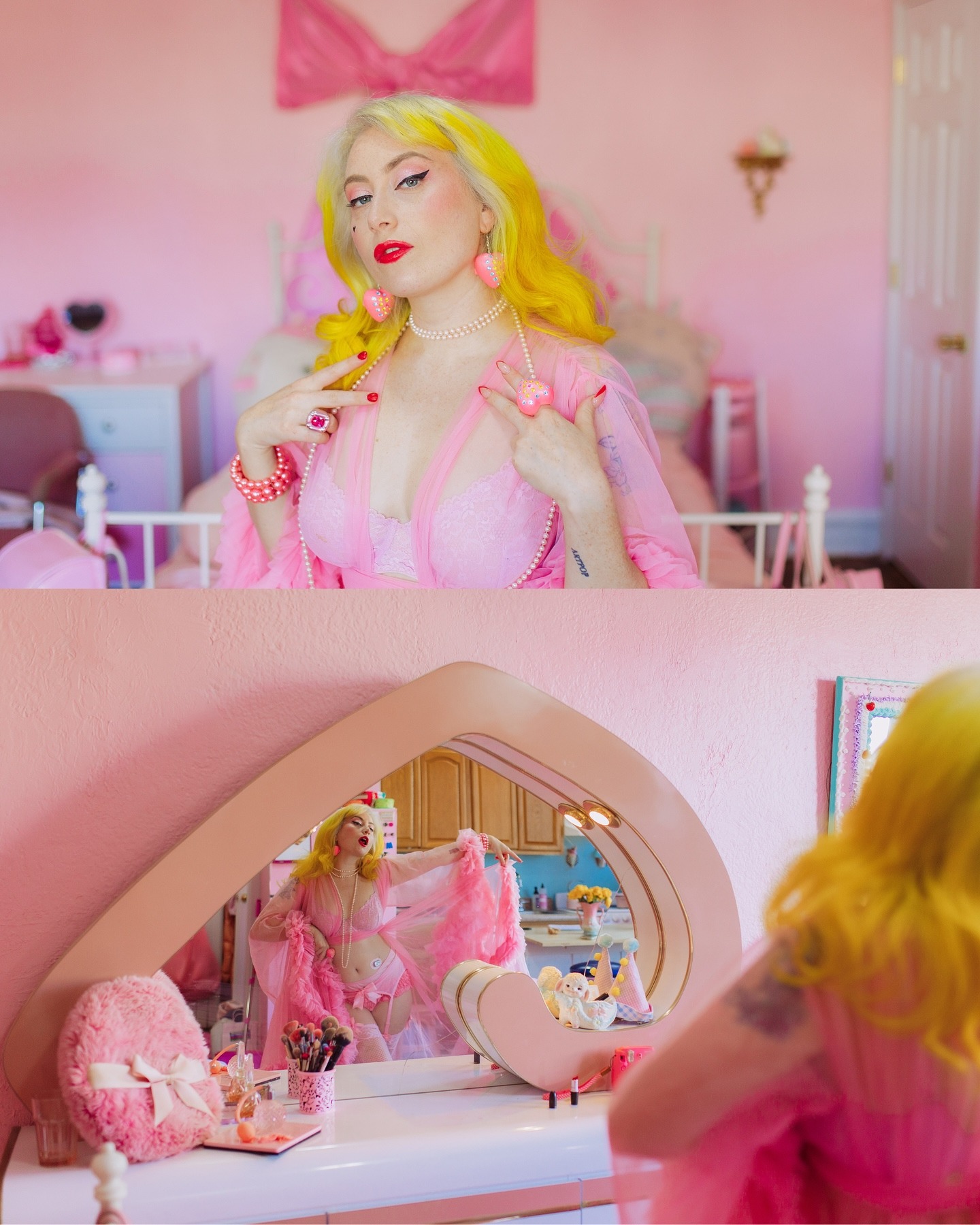
WA: Call it in. I was waiting for you to say our Mayor as well.
HB: Oh, you know. Yeah. Wait. Wait. Okay.
WA: She is like a political baddie. None of them were named but that's okay.
HB: Wait. Okay. I'm visioning everyone literally like on my bed behind me. We're just enjoying. We're femme-afesting. And having a little tree. I don't manifest. I femme-afest!
I'm calling in Candy Darling. I'm calling in Chelsea Manning, the dolls of the past, present, future.
And then I'm also calling in Chrissy Chapeca for the pink and the pop glamour. I'm calling in. I'm going to bring in Darializa (Avila Chevalier), who's running for Congress.
I'm dyke for Darializa. And I feel like, you know, she deserves it. After all, she's been through with the primary. And I'm also going to bring, yeah, I'm going to bring Lady Gaga. Sorry. And I'm going to bring Machine Dazzle. And I feel like, like low key, I'm scared to say this, but I want to bring RuPaul. I'm a RuPaulogist. I'm bringing RuPaul.

WA: Since you're such a diva in the organizing movement, could you name a few groups and orgs that people should be aware of and show up for to start to be movement makers themselves?
HB: Yeah. I, I love this question and what I've been telling people recently, especially since, um, the primaries here in New York is that, all around the country, and I'm thinking specifically of the Briar Blush Fan Club who reached out to me about how they can get more involved in politics, I said “look up your local DSA chapter (the Democratic Socialists of America) and just get involved. Go to 101 session. Become a card carrying member.” I talked to the founder of the Briar Blush Fan Club just a few weeks ago. She had no idea how to get her start. I said, "Follow Hot Girls Organize on Instagram," I'm a proud Hot Girls board member. And little did I know, literally two to three weeks later, she is now organizing a mutual aid drag show with her local DSA chapter in South Carolina.
It's a great place to start and there's chapters all over the country but I'd also really recommend if you're passionate about getting involved with the fight for Palestinian liberation to plug into Jewish Voice for Peace, whether you're Jewish or not you can get involved in the movement and there's also chapters everywhere.
There's tons of groups out there. I think it can be really intimidating to try to find your political home and you might think when you're first entering the political activist organizing sphere that you have to have all the answers, but the reality is you just need to show up. Even if you're just there listening, maybe helping put away the chairs or take out the trash after, you will work your way up into leadership and any good organization will empower you into leadership.
So even just showing up to your local LGBTQ center, seeing what's on their monthly calendars and figuring out how to show up. But a really great place to start is the Democratic Socialists of America. (beeping) Oh, that's my insulin pump. Sorry.

WA: Okay last question. We talked about orgs we could show up for. How can we show up for you? What parties, protests, or performances does Harsh Babe have coming up?
Yeah, so you can follow the @dykedarty Instagram for updates on a monthly dyke, doll, diva drag show I put on at The Rosemont in the summertime. You can also just follow me on my personal Instagram @harshbabe.nyc to find any upcoming shows and also ways to get involved politically. I'd really just encourage people, if they wanna go find not just drag shows that I'm performing in but all of the best sapphic and trans-inclusive events around the city, go to the Dykes & Dolls calendar zine. They have an incredible Instagram and Substack, and they also distribute zines all around the city. We've partnered many, many a time. That's my rec for how to plug into my little world.
WA: Love it. I actually am gonna ask one more bonus question because you are such a super star, ... remiss to not ask you, do you have a favorite SASS product?
HB: Do I have a favorite SASS product? Oh my gosh. This is so vanilla of me, but (laughs) I, I really like the chocolates, but I'm not an edible girly, I'm a flower girly, so I just like the straight-up chocolate. (laughs) I also love the lip balms.
WA: She needs lickable lips. Thank you Ariel!


